Best practices for carbon dioxide transport and storage
Downstream of carbon capture, efficient and safe transportation and storage methods require careful evaluation for the best decision-making

In brief
- Logistics & infrastructure: Detailing the cost-effective and safe methods for transporting high-volume CO2, including the technical challenges and safety requirements for pipeline repurposing.
- Purity & compliance: Understanding why CO2 purity is non-negotiable for pipeline integrity and safe downstream use, and the regulatory frameworks governing transport
- Permanent sequestration: Examining the viability of geological storage solutions and the extensive monitoring required to ensure long-term containment and prevent CO2 leakage.
- Widespread adoption: Highlighting the strategic investments, technological innovation and cross-industry collaboration needed to scale CCUS and meet global net-zero targets.


The CCUS value chain: From capture to storage
Why it is essential for reducing industrial emissions
Carbon Capture, Utilization and Storage (CCUS) is becoming an increasingly common strategy to manage industrial emissions and prevent the release of harmful CO₂ greenhouse gas (GHG) into the atmosphere. These methods are particularly attractive for two main reasons:
- Regulatory compliance: CCUS enables industries with high emissions, such as cement or steel, to effectively meet regulatory targets
- Mitigating constraints: CCUS implementation is particularly valuable when opportunities to reduce greenhouse gas emissions through simpler methods, e.g., fundamental improvements in process efficiency or switching to renewable energy sources, are limited or technically infeasible
While significant focus is placed on developing efficient carbon capture methods, substantial measures are also required downstream to process the captured CO2. The key steps in this process are:
- Compression: After capture, the gaseous CO2 needs to be compressed, sometimes into a liquid state
- Transport: The CO2 is then safely transported to a carefully selected location for its use or storage
- Logistics: Taking into consideration numerous factors, including distance, geography, existing infrastructure, environmental impact and cost of transport
Carbon dioxide transportation: Safe infrastructure for decarbonization
Currently, three primary modes of transportation dominate the industrial landscape. Each method offers specific benefits based on the project's scale and geographical position:
- Pipelines: The most established and often economical option for transporting large volumes of CO2 over long distances, especially onshore. Existing natural gas pipelines may be repurposed to reduce costs and environmental impact, but this requires careful assessment due to CO2’s corrosive properties and higher pressure demands. While natural gas pipelines typically operate up to about 90 bar (1,300 psi), CO2 transport can require pressures of up to 150 bar (2,175 psi).
- Ships: Ideal for overseas transport to distant utilization and storage sites.
- Overland by truck & rail: Provides flexibility for smaller quantities or shorter distances where pipeline infrastructure is limited. It enables transport between capture sites, storage facilities or consolidation hubs, but becomes costly over long distances and, in the case of trucks, adds traffic and diesel emissions.
Insights
Repurposing pipelines requires careful assessment due to CO2's corrosive nature and higher pressure. While natural gas lines are limited to 90 bar (1,300 psi), CO2 transport often requires up to 150 bar (2,175 psi).
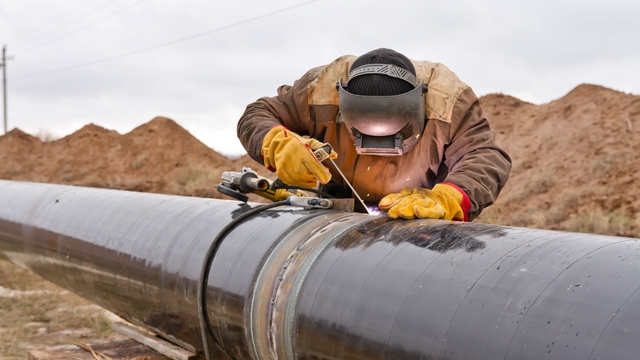
Carbon dioxide transportation pipeline
Ensuring safety and purity in industrial carbon dioxide transport
Ensuring the safe and efficient transport of carbon dioxide requires adherence to regulations and purity standards. While specific codes vary by region, carbon dioxide is classified as a hazardous material at high concentrations. Its transport is subject to rules similar to those governing natural gas in each locality. These regulations are essential for pipeline integrity, leak prevention and emergency response protocols.
Additionally, CO2 purity is critical, both for downstream end-use applications and transportation safety. Impurities like water, hydrogen sulfide and nitrogen oxides can represent major risks, potentially causing chemical reactions, corrosion, product defects and infrastructural damage.
How Endress+Hauser supports you
To manage these risks, you need real-time certainty. Endress+Hauser provides the reliable, accurate instrumentation necessary to monitor flow rate, pressure, temperature, quality and composition. This will help you:
- Stay compliant
- Detect impurities immediately
- Ensure the long-term integrity of your entire transport system
CO2 storage for a greener planet
Once captured and delivered, carbon dioxide must be used in an industrial process or safely stored to prevent its release into the atmosphere. The most frequently selected storage locations are cavernous geological formations, although deep-ocean sequestration is attracting growing interest.
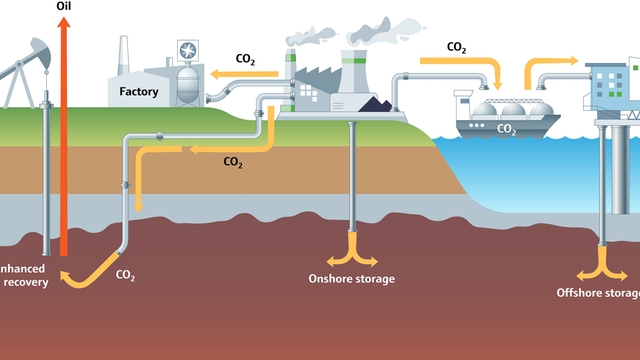
Carbon dioxide captured from industrial processes can be stored for centuries deep underground or subsea
Geological storage
Storing carbon dioxide in geological formations involves its injection deep underground, often more than a kilometer below groundwater levels, into carefully selected and monitored sites. Suitable locations are typically preexisting underground reservoirs, including depleted oil and gas fields, deep saline aquifers and coal seams that cannot be mined. These porous rock formations are typically capped with a non-porous "cap rock" to prevent CO₂ leakage.
Underground storage has provided a safe method for sequestering carbon dioxide for thousands of years. The U.S. Geological Survey (USGS) estimates that the United States has the geologic formations capable of storing approximately 3,000 metric gigatons of carbon dioxide. However, selecting suitable storage sites requires extensive geological surveys and modeling to ensure the formation’s integrity. This process also aims to minimize potential risks, such as induced seismicity and impacts on groundwater resources.
Alternative storage methods for CO2
While geological storage remains the most viable near-term option, researchers continue to explore alternatives. Mineral carbonation, for example, mimics natural geological processes by reacting carbon dioxide with elements in the earth to form stable carbonate minerals, effectively locking away carbon for long periods of time. Although long-term storage is promising, this method demands substantial energy and faces obstacles in terms of cost, scalability and resource access.
Alternatively, carbon dioxide can be injected into rock formations beneath the seabed. The North Sea in Europe, for instance, has the potential to store approximately 100 billion tons of CO2 within its vast sandstone layers. This is equivalent to almost the entire global emissions over three years.
How accurate measurement and monitoring ensure safety and integrity
Accurate measurement and monitoring with the right instrumentation are essential throughout the entire CCUS chain to ensure process efficiency, safety and environmental integrity. During transportation, carbon dioxide pressure, temperature, flow and quality must be measured in pipelines and at terminals to secure safe transport as well as accurate custody transfer.
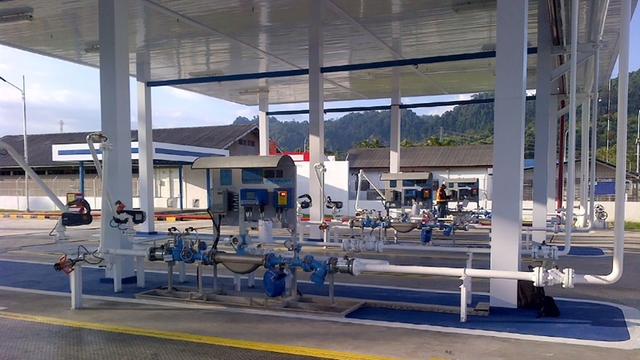
Delivering metering skids with custody transfer approval
Regardless of the chosen storage method, comprehensive monitoring is critical to ensure long-term site integrity and prevent CO₂ from leaking back into the atmosphere. Effective monitoring of carbon dioxide in storage reservoirs demands advanced technologies and sophisticated gas detection systems. This allows operators to stay informed about its movement and behavior deep underground. Continuous and robust measurement is key for an early detection of potential anomalies and leaks, providing prompt notification so personnel can intervene and minimize environmental risks.

Transportation and storage infrastructure innovations
Once captured, decisions must be made about carbon dioxide’s destination and the means to get it there. Ongoing research and significant investment from both public and private stakeholders are essential for scaling up transport and storage infrastructure necessary to reduce GHG emissions. This will improve the technological capabilities and economic viability of CCUS equipment, facilitating its widespread adoption in industry.
Capturing CO₂ from industrial product process streams is a crucial first step in the CCUS value chain. However, its long-term success relies on developing safe, efficient and sustainable transportation, utilization and permanent storage solutions. Top transportation contenders are pipeline, overland vehicle and sea-faring methods, while geological formations are best prepared for storage.
Streamlining efficiency and developing other options requires alignment among governments, process manufacturers, researchers and communities to address the technical, economic, regulatory and social challenges. However, investment in these capabilities is expected to increase the positive impact of CCUS on GHG reductions over the coming decades, helping industry achieve ambitious net-zero targets to create a more sustainable future.