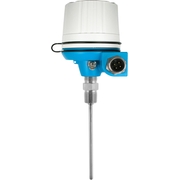
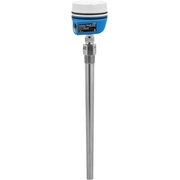
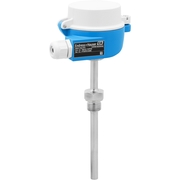
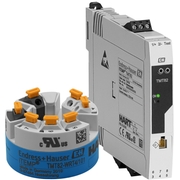
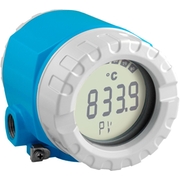
What is a thermocouple sensor and how does a thermocouple work?
Two of the most common sensor technologies in temperature measurement devices are resistance temperature detectors (RTDs) and thermocouples (TCs). The technology behind them is different, and each has its own benefits that drive the choice. In a thermocouple sensor, two different metals are joined together at one end. At this junction, changes in the temperature induce a voltage / electromotive force that is measured. TCs are not measuring an absolute temperature, but the temperature difference between the measuring point (T1) and a reference point (Tref).
TC (thermocouple) temperature measuring principle explained
Benefits
Wide temperature range from -270°C (454°F) to +1820°C (3308°F)
Fast response time, suitable for dynamic temperature measurements
High vibration resistance
Lower cost compared to RTDs
Rugged and durable, especially useful in harsh environments
Thermocouple types The Seebeck effect, which is made use of for TCs, states that a voltage is generated when two dissimilar metals are joined together. The voltage generated can then be measured and converted into temperature readings, using a calibration curve or table. There are different types of thermocouples, based on different wire pairs and measuring ranges. Each type of TC has a unique relationship between the voltage generated and the temperature. The type can be identified by an assigned letter, e.g. TC type K, type J or type T.
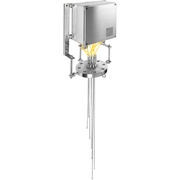
Endress+Hauser has developed a unique sensor called iTHERM ProfileSens for high temperatures, pressures and aggressive media, consisting of a robust double metal sheathed MI cable and temperature profiling with up to four TCs in one cable.
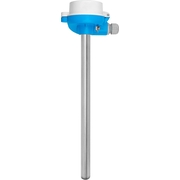
ПогрешностьClass AA acc. to IEC 60751 Class A acc. to IEC 60751 Class B acc. to IEC 60751 Class special or standard acc. to ASTM E230 Class 1 or 2 acc. to IEC 60584-2
Время откликаt90 starting at < 1,5 s iTHERM QuickSens depending on configuration
Макс. рабочее давление (статическое)depending on the configuration
Диапазон рабочих температурPT100 TF iTHERM StrongSens: -50 °C ...500 °C (-58 °F ...932 °F) PT100 TF iTHERM QuickSens: -50 °C …200 °C (-58 °F …392 °F) PT100 WW: -200 °C ...600 °C (-328 °F ...1.112 °F) PT100 basic TF: -50 °C ...200 °C (-58 °F ...392 °F) Typ K: max. 1.100 °C (max. 2.012 °F) Typ J: max. 800 °C (max. 1.472 °F) Typ N: max. 1.100 °C (max. 2.012 °F)
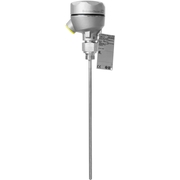
ПогрешностьClass AA acc. to IEC 60751 Class A acc. to IEC 60751 Class B acc. to IEC 60751 Class special or standard acc. to ASTM E230 Class 1 or 2 acc. to IEC 60584-2
Время откликаdepending on configuration
Макс. рабочее давление (статическое)depending on the configuration up to 500 bar
Диапазон рабочих температурPT100 TF iTHERM StrongSens: -50 °C ...500 °C (-58 °F ...932 °F) PT100 TF iTHERM QuickSens: -50 °C …200 °C (-58 °F …392 °F) PT100 WW: -200 °C ...600 °C (-328 °F ...1.112 °F) PT100 basic TF: -50 °C ...200 °C (-58 °F ...392 °F) Typ K: max. 1.100 °C (max. 2.012 °F) Typ J: max. 800 °C (max. 1.472 °F) Typ N: max. 1.100 °C (max. 2.012 °F)
Погрешностьdepending on application Class AA acc. to IEC 60751 Class A acc. to IEC 60751 Class B acc. to IEC 60751 Class special or standard acc. to ASTM E230 Class 1 or 2 acc. to IEC 60584-2
Время откликаdepending on application
Диапазон рабочих температур-196 °C…400 °C (-320,8 °F...752 °F)
ПогрешностьКласс AA по IEC 60751 Класс A по IEC 60751 Класс B по IEC 60751 Класс "специальный" или "стандартный" по ASTM E230 Класс 1 или 2 по IEC 60584-2
Время откликасверхмалое время отклика при использовании с термогильзой, t90 от менее 10 с в зависимости от конфигурации
Макс. рабочее давление (статическое)в зависимости от конфигурации, до 100 бар
Диапазон рабочих температурPT100 TF StrongSens: -50 °C ... 500 °C (-58 °F ... 932 °F) PT100 QuickSensTF: -50 °C ... 200 °C (-58 °F ... 392 °F) PT100 WW: -200 °C ... 600 °C (-328 °F ... 1112 °F) PT100 TF: -50 °C ... 400 °C (-58 °F ... 752 °F) Термоэлемент: Тип K: до 1100 °C (2012 °F) Тип J: до 800 °C (1472 °F) Тип N: до 1100 °C (2012 °F)
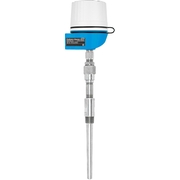
ПогрешностьКласс AA по IEC 60751 Класс A по IEC 60751 Класс B по IEC 60751 Класс "специальный" или "стандартный" по ASTM E230 Класс 1 или 2 по IEC 60584-2
Время откликаt90 от < 1,5 сек – QuickSens в зависимости от конфигурации
Макс. рабочее давление (статическое)в зависимости от конфигурации
Диапазон рабочих температурPT100 TF StrongSens: -50 °C ... 500 °C (-58 °F ... 932 °F) PT100 QuickSensTF: -50 °C ... 200 °C (-58 °F ... 392 °F) PT100 WW: -200 °C ... 600 °C (-328 °F ... 1112 °F) PT100 TF: -50 °C ... 400 °C (-58 °F ... 752 °F) Термоэлемент: Тип K: до 1100 °C (2012 °F) Тип J: до 800 °C (1472 °F) Тип N: до 1100 °C (2012 °F)
ПогрешностьClass AA acc. to IEC 60751 Class A acc. to IEC 60751 Class B acc. to IEC 60751 Class special or standard acc. to ASTM E230 Class 1 or 2 acc. to IEC 60584-2
Время откликаdepending on configuration
Макс. рабочее давление (статическое)depending on the configuration up to 500 bar
Диапазон рабочих температурPT100 TF iTHERM StrongSens: -50 °C ...500 °C (-58 °F ...932 °F) PT100 TF iTHERM QuickSens: -50 °C …200 °C (-58 °F …392 °F) PT100 WW: -200 °C ...600 °C (-328 °F ...1.112 °F) PT100 TF: -50 °C ...400 °C (-58 °F ...752 °F) Typ K: max. 1.100 °C (max. 2.012 °F) Typ J: max. 800 °C (max. 1.472 °F) Typ N: max. 1.100 °C (max. 2.012 °F)
Максимальная длина по запросуup to 1.500,0 mm (59,06'')
A highly reliable multipoint temperature cable probe for oil & gas and petrochemical applications designed to reduce maintenance intervals and the risk of untimely shutdowns due to sensor failure.
Technology, construction and benefits of resistance temperature detecors (RTDs) in temperature measurement.
/
Ваша конфиденциальность очень важна для нас
Мы используем файлы cookie для повышения удобства просмотра веб-страниц, сбора статистических данных для оптимизации функциональности сайта, а также для показа рекламы и контента, адаптированных специально под вас.
Выбирая опцию "Принять все", вы соглашаетесь с использованием нами файлов cookie.
Для получения более подробной информации ознакомьтесь с нашей Политикой использования файлов cookie .