High temperature thermometers
High temperature thermometers for applications in many industries
F
L
E
X
Simple products
Easy to select, install and operate
Technical excellence
Simplicity
Standard products
Reliable, robust and low-maintenance
Technical excellence
Simplicity
High-end products
Highly functional and convenient
Technical excellence
Simplicity
Specialized products
Designed for demanding applications
Technical excellence
Simplicity
FLEX selections
Technical excellence
Simplicity
Fundamental selection
Meet your basic measurement needs
Technical excellence
Simplicity
Lean selection
Handle your core processes easily
Technical excellence
Simplicity
Extended selection
Optimize your processes with innovative technologies
Technical excellence
Simplicity
Xpert selection
Master your most challenging applications
Technical excellence
Simplicity
Compare
Accuracy
class 2 acc. to IEC 60584
Max. process pressure (static)
at 20 °C: 1 bar (15 psi)
Operating temperature range
Type K:
Max. immersion length on request
up to 4.525,00 mm (178,15'')
Accuracy
class 2 acc. to IEC 60584
Max. process pressure (static)
at 20 °C: 1 bar (15 psi)
Operating temperature range
Type K:
Max. immersion length on request
up to 4.000,00 mm (157,48'')
Accuracy
class 2 acc. to IEC 60584
Max. process pressure (static)
at 20 °C: 1 bar (15 psi)
Operating temperature range
Type S:
Max. immersion length on request
up to 3.500,00 mm (137,80'')
Accuracy
class 2 acc. to IEC 60584
Max. process pressure (static)
at 20 °C: 1 bar (15 psi)
Operating temperature range
Type S:
Max. immersion length on request
up to 3.500,00 mm (137,80'')
Accuracy
class 2 acc. to IEC 60584
Max. process pressure (static)
at 20 °C: 1 bar (15 psi)
Operating temperature range
Type S:
Max. immersion length on request
up to 2.500,00 mm (98,43'')
High temperature thermometers
Our product finder helps you to search for suitable measuring devices, software or system components via product characteristics. Applicator leads you through an individual product selection via application parameters.
About high temperature thermometers
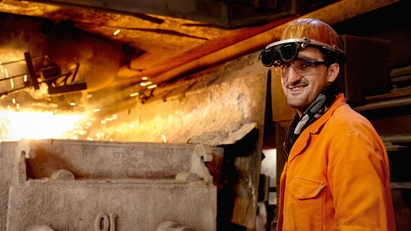
In steel treatment, glass smelters, flue gas applications and in the brick and ceramics industries temperatures up to 2000 °C (3632 °F) can occur. High temperature applications require special thermometers with thermowells made from ceramic or special alloys and different types of thermocouples made from base or noble alloys, such as platinum and rhodium. The protection tube protects the sensor from mechanical and chemical damages and temperature shocks caused by the process and therefore increases the life span of the sensor.
Portfolio description
Our portfolio of modular high temperature thermometers provides:
Modular design for easy configuration to the application needs Optional temperature transmitter integrated or in remote location Thermocouples (TC) sensors type J, K, N or type B, S, R Protection tubes made from special alloys or wide range of ceramic material Threaded, compression fitted and flanged process connections
©Endress+Hauser
©Endress+Hauser
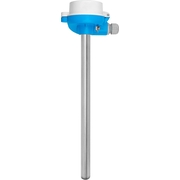
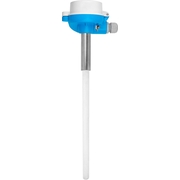
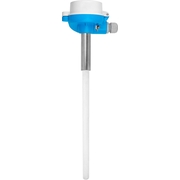
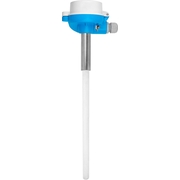
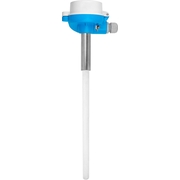
Thermometer with ceramic thermowell
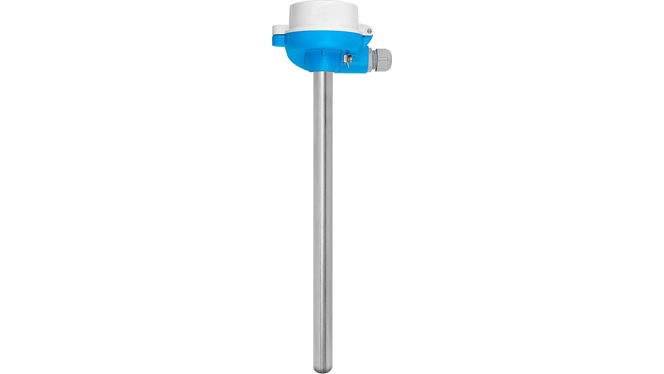
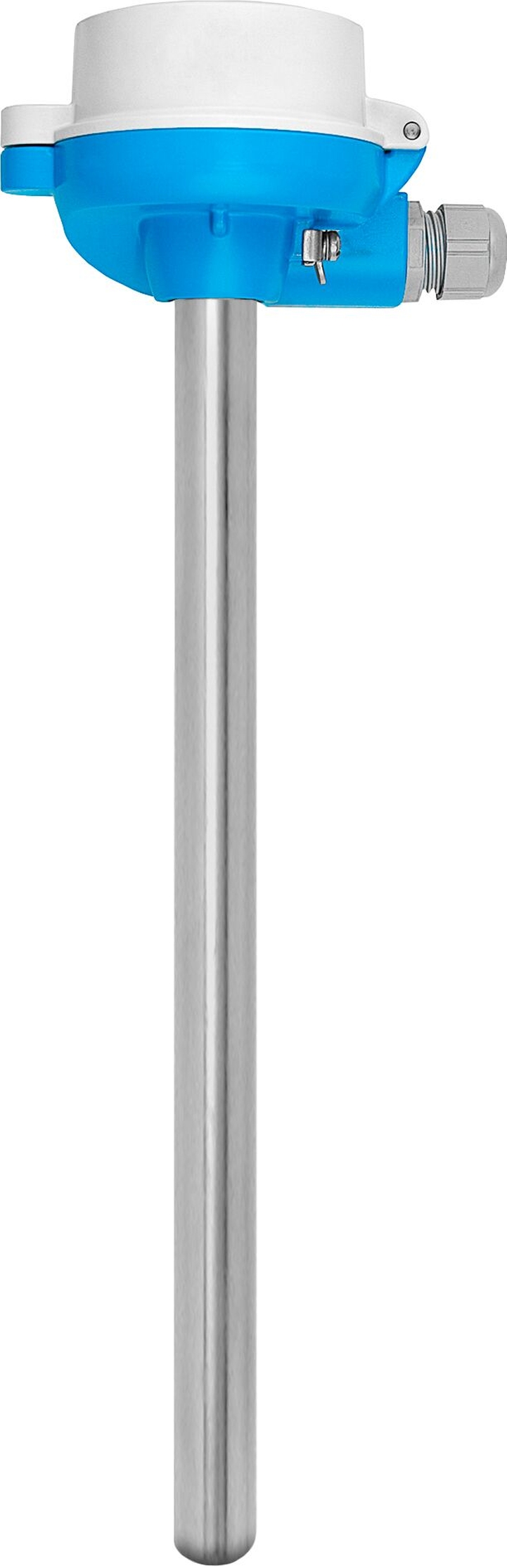
Thermometer with metal or alloy thermowell
Thermometer with ceramic thermowell
Thermometer with metal or alloy thermowell
The modular design and the high variety of options allow a configuration of the thermometers to the requirements of the applications in a high variety of industries.
Energy production e.g. biomass, coal Chemical industry e.g. gasifiers Industrial furnaces e.g. waste incineration Glass industry Steel and iron production Cement and building material
Long lifetime by usage of innovative thermowell materials with increased wear and chemical resistance Cost savings for maintenance of the measuring point, quality improvements of the products and increased plant safety Long term stable measurement due to sensor protection with non-porous materials Flexible product selection by modular design Possibility of customized solutions
Related content
News, events and more...
Related topics
Technology, construction and benefits of thermocouples (TCs) in temperature measurement.
Basics & measurement principle
What temperature is considered "high temperature" in industrial processes?
In industrial measurement, applications above ~600 °C (~1112 °F) are generally considered high‑temperature applications. Many furnace and thermal processes exceed 1000 °C (1832 °F) and can reach temperatures of 1600 °C (2912 °F) or higher.
Depending on the thermocouple type, protection concept, and application conditions, thermocouples can measure temperatures from a few hundred degrees up to 1800 °C (3270 °F).
Which sensor technology is suitable for high temperature measurement?
Thermocouples are the primary sensor technology for high‑temperature measurement. RTDs are typically used at lower temperatures where higher accuracy and long‑term stability are required.
RTDs (Resistance Temperature Detectors) are typically limited to temperatures of about 600–700 °C (1112-1292 °F). Above this range, thermocouples are usually the only technically viable solution because they can measure temperatures up to more than 1600 °C (2912 °F) depending on the thermocouple type and construction.TCs (Thermocouples) are preferred in applications where high temperatures, strong vibration, pressure, rapid temperature changes, or harsh environmental conditions occur. Compared to resistance thermometers, thermocouples are more rugged and offer wider usable temperature ranges, making them suitable for demanding industrial processes such as furnaces, reactors and exhaust systems.
Which thermocouple type should I choose for high temperatures?
Base‑metal thermocouples such as Type K or Type N are commonly used for medium to high temperatures (up to 1260 °C).
Noble‑metal thermocouples such as Types S, R, and B are used for very high‑temperature applications (up to 1600–1700 °C) requiring higher temperature resistance and stability.
Do thermocouples measure absolute temperature in high‑temperature applications?
No. A thermocouple measures the temperature difference between the measuring junction and a reference (cold) junction . The absolute process temperature is calculated in the transmitter using reference‑junction compensation.
Where does a thermocouple actually measure temperature inside a high‑temperature process?
A thermocouple does not measure exclusively at its physical tip. The thermoelectric voltage is generated along the entire thermocouple length, with the largest contribution coming from the zone with the highest temperature gradient. Correct immersion depth, sensor position and installation location therefore strongly influence the measurement result.
Why are remote‑mounted transmitters often used in high‑temperature applications?
Electronics, such as in the transmitter, have significantly lower temperature limits than thermocouples. In high‑temperature applications, remote mounting protects the transmitter from excessive ambient temperature and ensures reliable signal processing and long‑term stability.
Why do thermocouples drift at high temperatures?
Thermocouple drift is caused by chemical and physical changes at high temperatures, including oxidation, diffusion of alloying elements, grain growth, and contamination from the process atmosphere or protection materials . Drift increases with higher temperatures and longer exposure times.
TC drift becomes significant mainly at temperatures above approximately 600 Celsius (1112 Fahrenheit). Below this range, drift processes occur much more slowly and are often negligible over typical operating lifetimes.
Why do thermocouples often drift toward lower measured values at high temperatures?
In many high‑temperature applications, thermocouples tend to drift toward negative deviations over time. This is caused by material changes and contamination effects that reduce the generated thermoelectric voltage, leading to measured temperatures that are lower than the actual process temperature.
Can thermocouple drift be detected through calibration after operation?
In most high‑temperature applications, drift typically occurs in local hot zones with strong temperature gradients that cannot be reproduced in standard calibration conditions . As a result, calibration after use often does not reveal the actual measurement deviation.
Show more
Show less
Mechanical stress, lifetime & wear
What limits the maximum usable temperature of a thermocouple?
In addition to material limits (melting point), thermomechanical stress plays a major role. High temperatures reduce material strength, while gravity, vibration, and thermal expansion introduce mechanical stress that can cause inhomogeneities and premature failure.
Are high‑temperature thermocouples considered consumables or wear parts?
In many high‑temperature applications, thermocouples are wear parts. Lifetimes of some months to a year may already be considered acceptable, depending on process conditions. Regular maintenance in the form of replacement is required.
Why can the same thermocouple material show very different lifetimes in similar applications?
Small differences in gas composition, impurities, abrasion, temperature gradients, and operating profiles can significantly affect lifetime, even in similar industries or plants.
How does the process atmosphere affect thermocouple lifetime in high temperature measurement?
Process atmosphere has a major impact on thermocouple lifetime. Oxidizing, reducing, or contaminated atmospheres can accelerate corrosion, diffusion, and aging, significantly reducing service life.
Why do hydrogen‑ or sulfur‑containing atmospheres strongly influence TC lifetime?
Certain light or reactive gases can diffuse through protection materials at high temperatures and react with thermocouple alloys , accelerating aging, contamination and drift even when temperature limits are not exceeded.
Are ceramic protection tubes really gas‑tight at high temperatures?
No material is completely gas‑tight at high temperatures. High‑purity ceramics significantly reduce gas diffusion and contamination, but light gases such as hydrogen can still permeate materials depending on temperature and pressure.
Which wire diameter for thermocouple wires is recommended?
The higher the process temperature and the longer the duration at the highest temperature, the thicker the thermocouple wire should be selected , as this can extend the lifetime of the thermocouple by delaying drift effects. For applications with long exposure to high temperatures, larger wire diameters are therefore used to achieve improved durability.
At the same time, material cost must be considered . Increasing the wire diameter leads to higher material consumption, which impacts the overall cost, especially for noble metal / platinum thermocouples such as Types R, S, and B.
Why are special extension or compensation cables required for thermocouples?
Measurement errors can occur if the wire materials don’t exactly match the thermocouple.
Using copper cables would create additional thermoelectric junctions and measurement errors. Extension or compensation cables made of compatible materials preserve signal integrity between the sensor and the transmitter, but increase overall system cost.
Can high‑temperature thermocouples be used in ATEX or Ex areas?
In most high‑temperature applications, Ex zoning is not practically relevant because explosion protection is limited to defined surface temperatures well below typical high‑temperature process levels.
Show more
Show less
iTHERM FlameLine portfolio
What is the difference between the Endress+Hauser high‑temperature thermometers?
The iTHERM FlameLine portfolio includes different models:
TAF11 uses ceramic protection for gas‑phase and high‑temperature applications TAF12D/T/S uses ceramic multi‑sheath designs for the highest temperatures TAF16 uses metallic or special‑alloy protection for mechanically demanding conditions
Which TAF thermometer is designed for the highest temperatures?
TAF12T is designed for the highest temperature applications , using noble‑metal thermocouples and high‑performance ceramic multi‑sheath protection.
Why should TAF12 thermometers usually be configured with double or triple ceramic sheaths?
In iTHERM FlameLine TAF12, additional internal ceramic sheaths are required to protect the platinum thermocouple from contamination and aging, which can significantly extend sensor lifetime compared to single‑sheath designs.
Which high-temperature thermometer should I choose for my application?
Selection of the right product typically starts with the application conditions.
For extremely high temperatures with limited mechanical stress, ceramic designs such as iTHERM FlameLine TAF12D/T/S are preferred. For mechanically demanding applications with high vibration or abrasion , iTHERM FlameLine TAF16 is often the better choice.
We value your privacy
We use cookies to enhance your browsing experience, collect statistics to optimize site functionality, and deliver tailored advertisements or content.
By selecting "Accept all", you consent to our use of cookies.cookie policy .
Customize
Accept only essential
Accept all